Company
Built by operators, engineers, and industry leaders
We're Integrity Systems — a group that cares as much about how things run in the field as we do about what shows up on a screen. Our backgrounds span technical architecture, industrial execution, and real relationships in data centers, energy, aerospace, defense, and oil and gas.
Fix the data story first. Then bring in the intelligence.
For a long time, "predictive maintenance" has often meant slapping AI on data that was never good enough to begin with. Gaps in sensor coverage, systems that don't talk to each other, and tooling built for a different era of infrastructure — it adds up to a lot of noise and not much you can bet an outage on.
When the inputs are complete and trustworthy, the rest finally starts to behave the way operators expect it to.
- 01
Fix the inputs first
Figure out what's missing, put the right sensing in place (or augment what you already have), and build a relationship-aware picture of the operation before we ask models to do anything dramatic.
- 02
Own the stack end to end
Electrical, mechanical, and thermal design for industrial monitoring — from picking sensors to thinking through power architecture — so the system still works after shipping.
- 03
Tie into what exists
BMS, DCIM, SCADA, and field kit without asking you to rip everything out first. Surveys, install coordination, commissioning, and proving performance against how you actually run the site.
Integrity was founded to close the gap between what monitoring promises and what operators can actually deploy.
Brett and Connor lead the company with one commitment: every capability, every model, every decision the platform produces has to hold up where it matters — on a live site, under real conditions, with evidence an operator can defend.
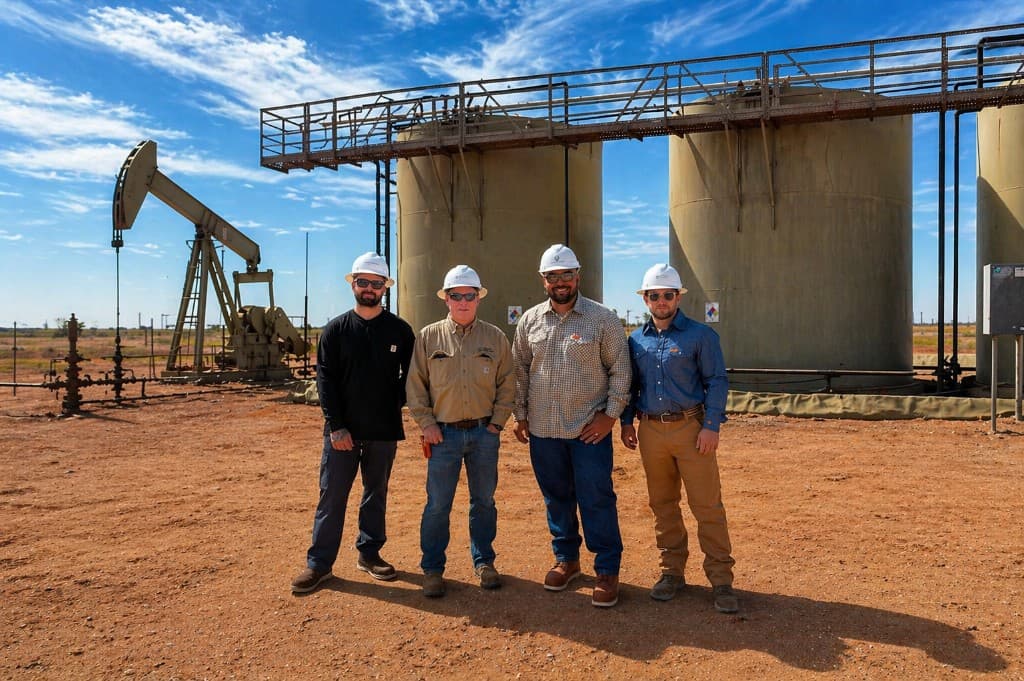
A real bench behind the names on the website.
Folks who live in electrical, mechanical, and thermal design for industrial monitoring, from picking sensors to thinking through power architecture — and who show up in the weeds on surveys, install coordination, commissioning, and proving performance.
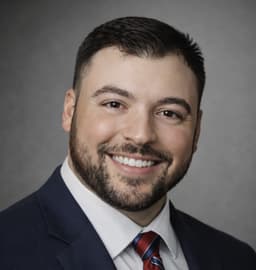
Brett Wade
CEO, founder
Brett founded Integrity Systems to close the gap between what industrial operators need and what predictive monitoring actually delivers. He leads company strategy, market positioning, investor relationships, and partnership development across verticals — translating deep domain understanding into operational direction.

Connor Wooley
CTO, co-founder
Connor leads engineering architecture, product development, and the deep-technology roadmap that underpins the platform. He translates complex technical capabilities — from edge inference to hierarchical asset modeling — into scalable, deployable systems for real customer environments.
We're an instrumentation-first company — not another dashboard with a fresh coat of paint.
We design and manufacture sensors, write firmware for the edge, and build analytics in the cloud, so we own the stack end to end. Industrial sites aren't "cloud-only" or "edge-only" problems; they're both, and we architect that way on purpose. And we get a little stubborn about evidence — provenance and auditability aren't afterthoughts, they're how you earn trust when the stakes are high.
- Walked plant floors and data halls
- Design and manufacture our own sensors
- Firmware at the edge, analytics in the cloud
- Evidence and provenance are non-negotiable
Fewer heroics. More evidence.
A shared operating cadence between our team and yours — built so you can tell us to stop, keep going, or expand with the same confidence you use to run the site today.
- 01
Start with the inputs
You can't model your way out of bad or incomplete data, so we start by fixing the sensing and integration story — not by retraining another model on top of the same noise.
- 02
Prove value on one critical system
We'd rather prove value on one critical system and a clear ROI story than boil the ocean on day one. When that loop works, the rest of the site follows.
- 03
Explain before you recommend
Operators should understand what the system is doing before we ask them to act on it — which is why evidence-backed outputs, not opaque alerts, are the default.
- 04
Keep the why with the what
The reasoning behind a recommendation matters as much as the recommendation itself. We preserve it so the decision is defensible later.
We don't pretend we figured everything out alone.
A board and advisory bench that keeps us honest across the industries where uptime is contractual and failure is measured in millions.
Board & strategic advisors
Skip Alvarado
Board
Oil & gas · advanced nuclear
Senior-level relationships across oil and gas and advanced nuclear deployment. His experience in modular nuclear and hydrocarbon operations helps us get in front of the people who actually run energy infrastructure.
Michelle Holthaus
Strategic advisor
Data center · semiconductor ecosystems
Strategic relevance in data center and semiconductor-adjacent ecosystems. As CEO of Intel Products, she helps us stay grounded in how big compute and infrastructure decisions really get made.
Advisory board
John Vollmer
Advisory board
Aerospace · government systems
Weighs in on aerospace and government systems — Boeing Space Program-level rigor, large-scale systems engineering, and the messy reality of government contracts. That matters when we're talking to defense and aerospace-adjacent customers who've seen vendors overpromise before.
Drew Donahoe
Advisory board lead
Oil & gas transactions · partnerships
Leads our advisory board and knows oil and gas transactions inside out — diligence, contracts, where deals actually break. That commercial depth keeps us honest in energy-sector conversations and in how we structure partnerships.
Our edge isn't a single piece of software. It's the mix.
Instrumentation depth, system design chops, access and credibility across the industries that matter, and the willingness to deliver field-ready systems — not just another login and a chart.
Instrumentation depth
Sensors, firmware, and edge hardware we design ourselves.
Systems design chops
Power, cooling, vibration, and control engineering under one roof.
Access and credibility
Relationships that open doors in the industries that matter.
Field-ready systems
Delivered to work on-site — not another login with a chart.
Start a technical conversation
Tell us about the systems you run today — we'll come back with a specific first step, not a generic pitch.